
Category: Module – MMDA
-
Multivariate Methods for Data Analysis
Day 68 Type of Multivariate Techniques Day 69 Statistical Significance and PowerPowerMultiple RegressionStep to form Regression Day 70 Tutorial Day 71 Factor Analysis Day 72 Tutorial Day 73 Cluster AnalysisK-means Cluster Day 74 Tutorial Day 75 Multiple Discriminant Analysis Day 76 Tutorial
-
Day 75
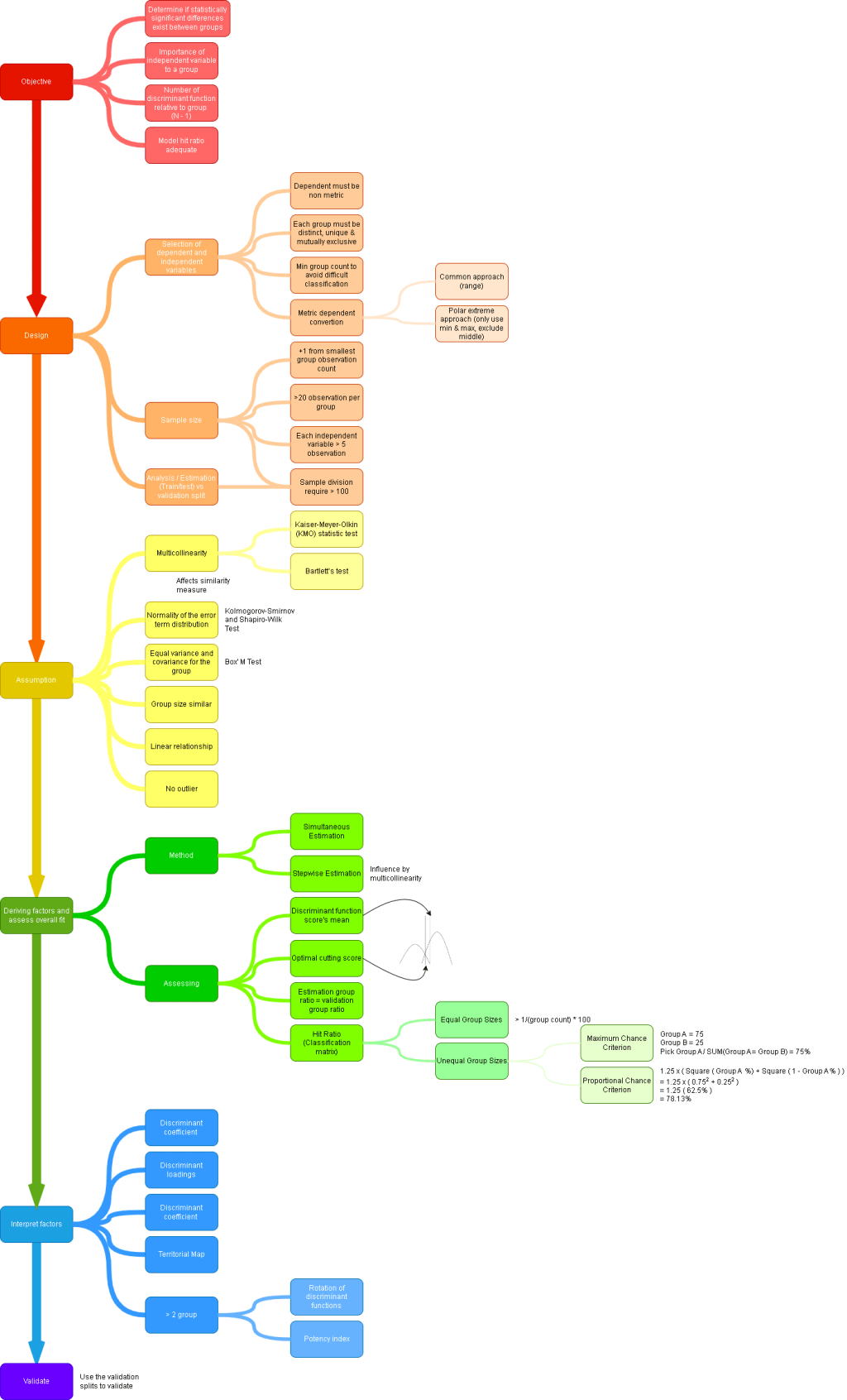
Multiple Discriminant Analysis ps. Classify observation into groups (non metric). SPSS Step 1. Normality of the independent variable distribution test result. Note that KS test is meant for n > 50 and SW test is meant for n < 50. Sig value > 0.05 means accept null hypothesis (variable are normally distributed). Step 2. Collinearity…
-
Day 73

Cluster Analysis ps. Group similar objects/observations based on the characteristic in a cluster that different to other object in other cluster. Also known as Q analysis or taxonomy. Hierarchical Cluster SPSS Step 1. Bring up Cluster analysis dialog box. Step 2. Configure all cluster setup. Step 3. Interpret agglomeration schedule and dendrogram. Look into Cluster…
-
Day 72
Tutorial 2 Question 1 Example Answer Exclude Q7 and Q8 Exclude Q6 as it is cross loading, show almost similar magnitude in factor 1 and factor 2. Factor 1 can be named as “Eating habits”.Factor 2 can be named as “Food preparation”.Surrogate variable = Q1 for factor 1, Q10 for factor 2.Summated scale f1 =…
-
Day 71
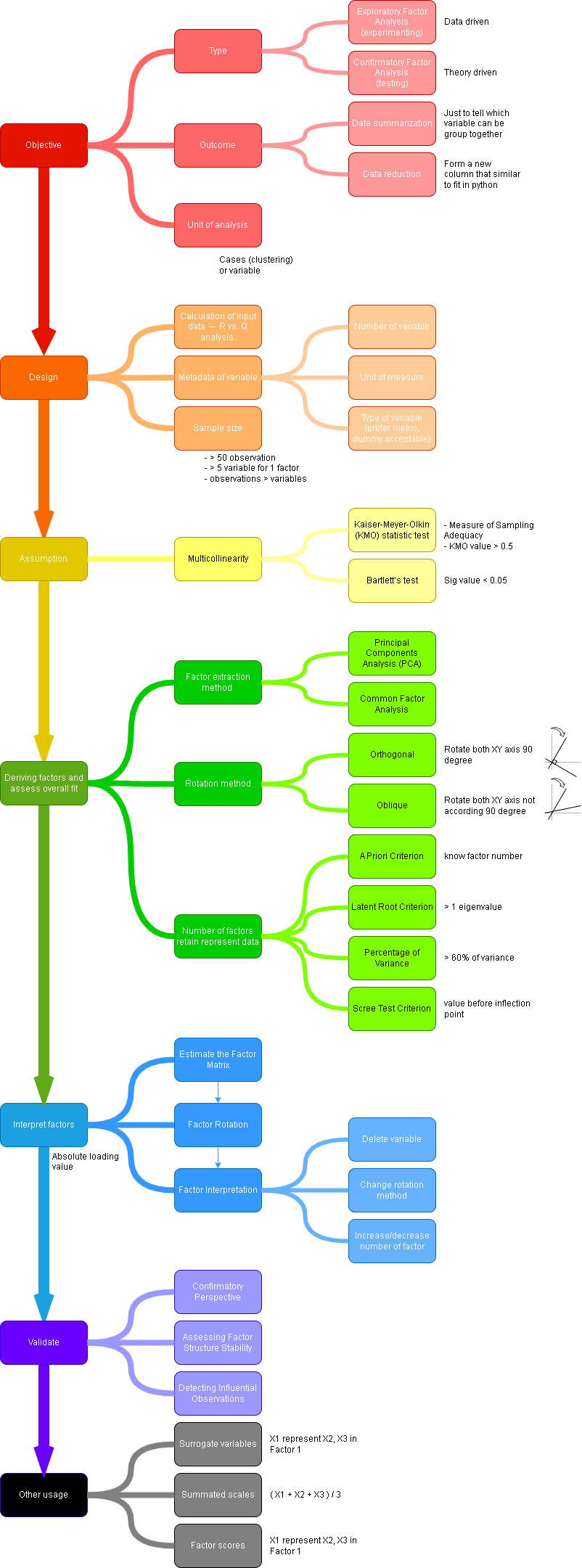
Factor Analysis ps. Not looking the effect of 1 variable to another variable. Only looking at how to group variable together that form a common characteristics. Underlying structure also known as factor. SPSS Step 1. Bring up Factor analysis dialog box. Step 2. Configure all factor setup. Step 3. Correlation test result. Relationship between 2…
-
Day 70
Tutorial 1 Question 1 Example Answer Question 2 Example Answer Exclude Pulse Exclude BSA By using stepwise method, independent variable are introduce/remove step by step while training the model.
-
Day 69
Statistical Significance and Power ps. This is to explain the consequences of making wrong judgement on statistical test. H0 is True H0 is False Accept H0 Type 2 Error Reject H0 Type 1 Error Power ExampleType I error (false positive) involves wrongly diagnosing a healthy person with a medical condition, risking unnecessary surgery. Type II…
 Kim 2 ML