
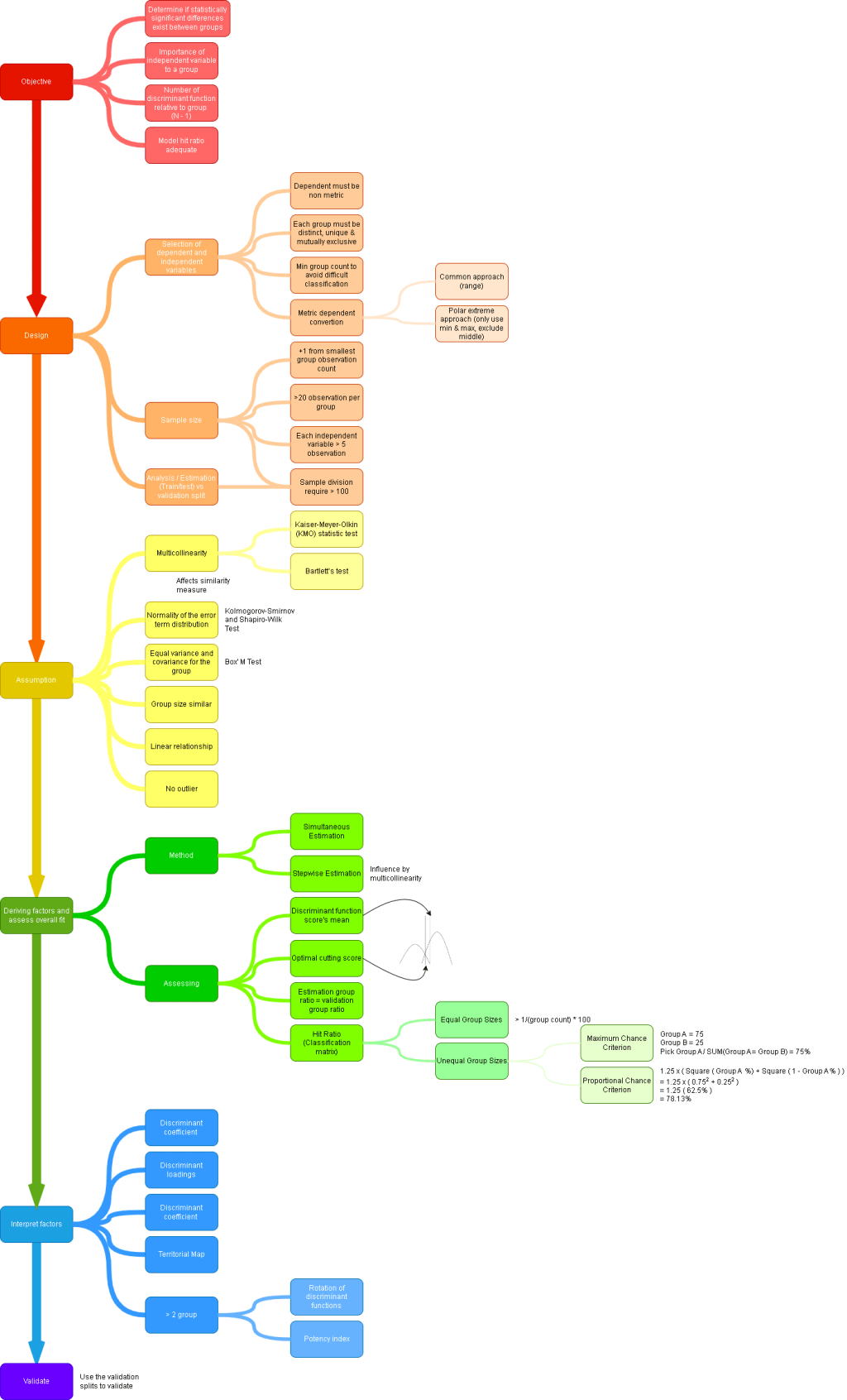
Multiple Discriminant Analysis
ps. Classify observation into groups (non metric).
SPSS
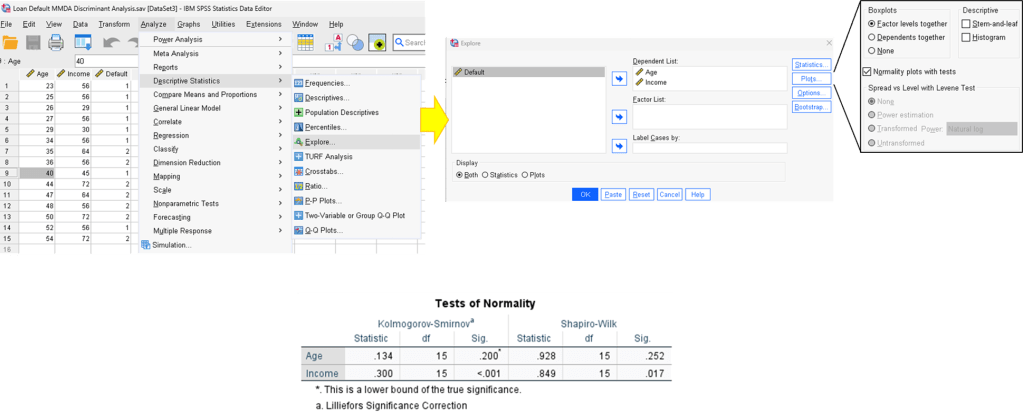
Step 1. Normality of the independent variable distribution test result.
Note that KS test is meant for n > 50 and SW test is meant for n < 50.
Sig value > 0.05 means accept null hypothesis (variable are normally distributed).
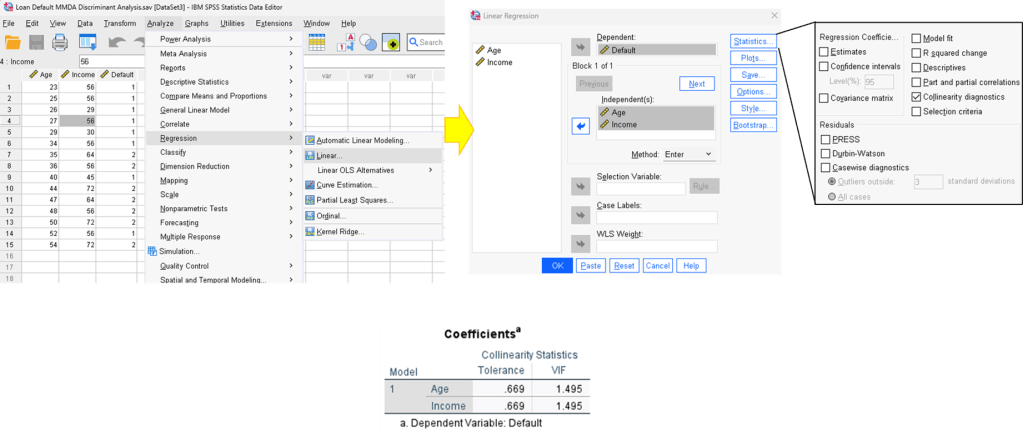
Step 2. Collinearity Test.
VIF Value < 10 means there are no multicollinearity.
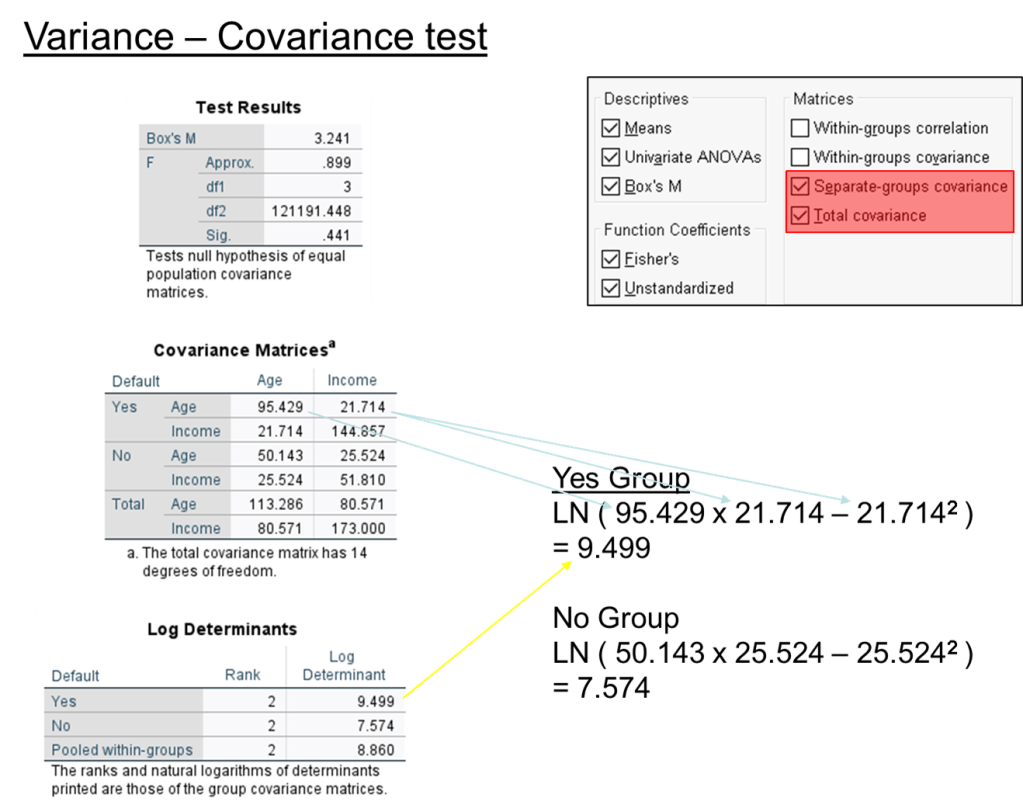
Step 3. Variance covariance test.
Box’s M test (unstable)
H0 : Equal variance-covariance matrix of the independent variable within each group
H1 : There no equal variance-covariance matrix.
Sig Value > 0.05 means there is equal variance-covariance matrix in the independent variable in both categories.
Yes log determinants value is 9, no value is 8; Both are quite close to each other, the variance-covariance matrix is equal.
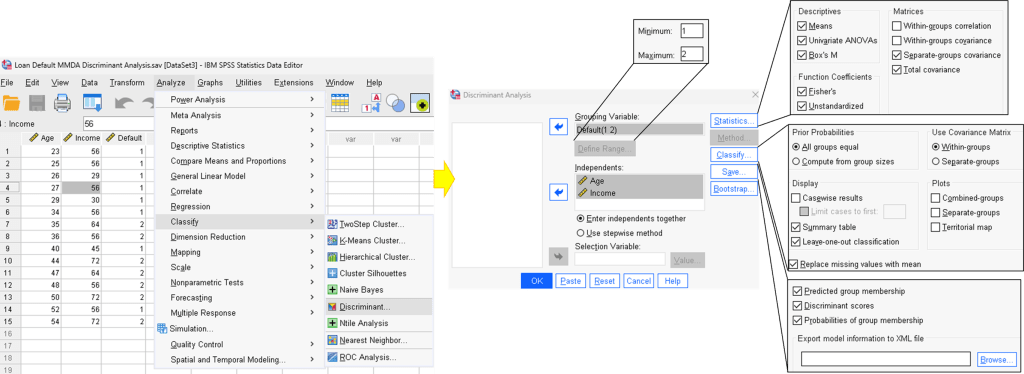
Step 4. Bring up discriminant analysis dialog box.
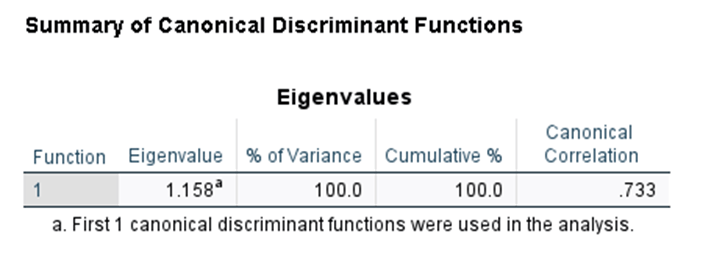
Step 5. Discriminant function explains the variation
Note, only 1 function here as there are only 2 independent variable.
Eigenvalue should be greater than 1.
Canonical Correlation means correlation between independent variable and discriminant function; should be greater than 0.35.
Power(0.733, 2) = 0.537
53.7% variation in dependent variable is explain by the discriminant function.

Step 6. Discriminant function significant test.
Sig < 0.05 is significant. Conclusion discriminant function is explains the variance well.
Step 7. Identify most discriminating power.
Income > Age.
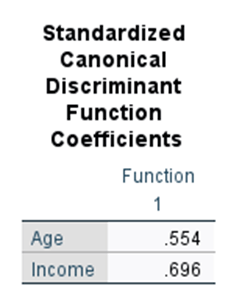
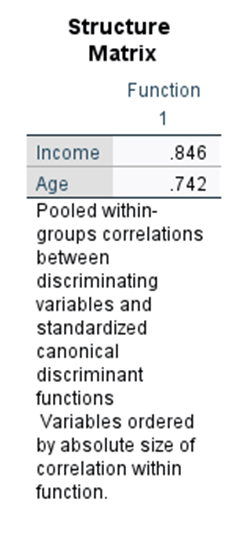
Step 8. Independent variable loading test.
Discriminant loading, should be > +- 0.4
Both age and income has good discrimitary power
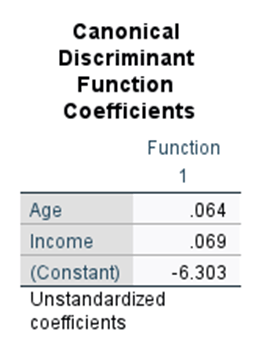
Step 9. Form discrimination function
Z = -6.303 + 0.64(age) + 0.69(income)
Step 10. Cutting score (Equal prior probabilities)
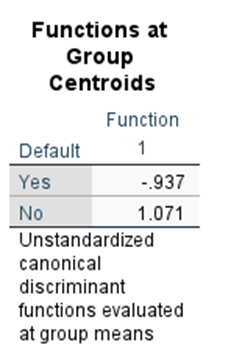
Zce
= ( Zyes + Zno ) / 2
= (-0.937+1.071)/2
= 0.067
Z < 0.067, classify the individual to Yes
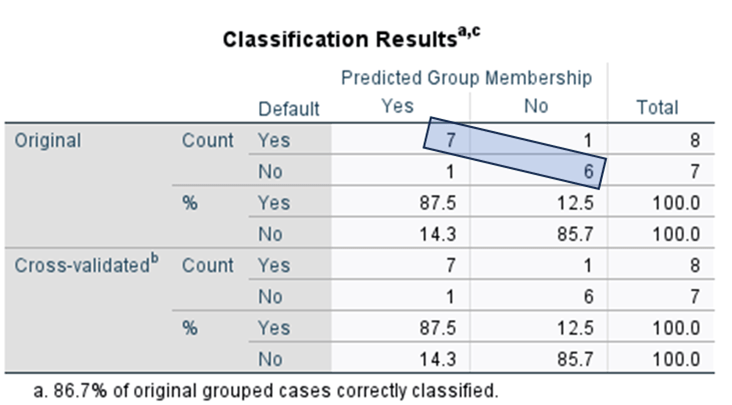
Step 11. Discriminant function accuracy test
Hit Ratio
= (7+6)/15 * 100
= 86.67%
Using equal prior prob, percentage correct classified by chance
= 1 / ( number of group ) x 100
= 1 / 2 x 100
= 50%
Margin up 25%, get 1.25
1.25 * 50
= 62.5%
86.67% > 62.5%, is a good fit model
 Kim 2 ML
Leave a comment